






Garden waste collection guide Castelnau Barnes
Posted on 10/08/2026
If your garden is starting to look more like a small green jungle than a place to relax, you are not alone. In Castelnau and Barnes, gardens can fill up fast after a weekend of pruning, mowing, hedge cutting, or a tidy-up before guests arrive. This Garden waste collection guide Castelnau Barnes is here to make the whole process clearer, quicker, and a lot less messy. You will find practical advice on what counts as garden waste, how collection usually works, what to avoid, and when it makes sense to book a dedicated collection instead of trying to shift everything yourself. Simple really - though, to be fair, garden clear-ups are rarely as simple as they look.
Whether you are dealing with a few bags of cuttings or a full seasonal clear-out, the key is knowing how to sort, store, and move the waste safely. That saves time, avoids extra hassle, and helps keep your outside space looking neat without turning your driveway into a temporary compost heap.
Contents
- Why garden waste collection matters in Castelnau and Barnes
- How garden waste collection works
- Key benefits and practical advantages
- Who this is for and when it makes sense
- Step-by-step guidance
- Expert tips for better results
- Common mistakes to avoid
- Tools, resources and recommendations
- Law, compliance, standards and best practice
- Options, methods and comparison table
- Case study or real-world example
- Practical checklist
- Conclusion
- Frequently asked questions
Why Garden waste collection guide Castelnau Barnes Matters
Garden waste sounds harmless enough: grass clippings, leaves, hedge trimmings, branches, maybe a few uprooted weeds. But once it starts building up, it quickly becomes bulky, awkward, and surprisingly time-consuming to manage. In a local area like Castelnau Barnes, where homes often have established gardens and regular seasonal maintenance, waste can gather after one long afternoon faster than people expect.
The reason a proper collection guide matters is not just convenience. It is about keeping paths clear, preventing pests, avoiding damage to hedges or lawns, and making sure the waste ends up in the right place. Garden waste is also one of those jobs that seems easy until you are standing there with damp branches, five torn bags, and mud all over the front step. We have all been there, or close enough.
There is also the local rhythm of life to think about. Many Barnes residents like tidy outdoor spaces, especially when the garden doubles as somewhere to enjoy quiet mornings, entertain friends, or simply open a window and breathe in something better than city traffic. A neat garden feels different. It changes the whole mood of a property.
If your outside space is part of a wider home improvement project, you may also find it useful to look at waste clearance in Barnes and recycling and sustainability for a broader view of how green waste can be handled responsibly alongside other unwanted materials.
How Garden waste collection guide Castelnau Barnes Works
At a practical level, garden waste collection is fairly straightforward. You gather the organic waste, keep it separate from general rubbish, and arrange for it to be removed and processed appropriately. The details can vary depending on the size of the job, the amount involved, and the type of service you choose.
In most cases, the process looks something like this:
- You identify the waste you want removed.
- You sort it into a usable pile, bags, or containers.
- You check whether anything needs special handling, such as large branches or mixed materials.
- You arrange collection or set out the waste for pickup if that is how your service works.
- The waste is loaded, transported, and taken to an approved facility for treatment, composting, or recycling where possible.
The exact method matters because not all garden waste is the same. Fresh grass cuttings behave very differently from woody hedge offcuts. Wet leaves compact quickly. Thorny branches can snag bags. Soil, turf, and plant roots can make loads heavier than they look. A good collection plan takes all of that into account instead of treating every pile as one simple mound of green stuff.
For larger jobs, especially after landscaping or a full garden overhaul, it can be worth combining garden waste removal with broader support from garden waste removal in Barnes or even rubbish removal in Barnes if the job includes broken pots, old fencing, or a mix of materials. That keeps the process tidy and avoids multiple trips.
One small but important point: if your waste is mixed with general household rubbish, it may no longer be suitable for the same treatment route. That is where many people get caught out. A clean, separated load is much easier to manage.
Key Benefits and Practical Advantages
The obvious benefit is that your garden gets back to looking like a garden instead of a holding area for branches. But there are several more practical advantages too.
- Saves time: You avoid repeated trips to move heavy, messy bags yourself.
- Reduces stress: A clear plan means less guesswork and fewer last-minute scrambles.
- Improves safety: Sharp cuttings, slippery leaves, and awkward branches are less likely to cause accidents.
- Helps with presentation: Useful if you are getting a property ready for sale or rental.
- Supports cleaner recycling routes: Separated green waste is more likely to be processed properly.
There is also a quieter benefit that people often overlook: headspace. A cluttered garden tends to feel like another unfinished task on a long list. Once the waste is gone, the whole space feels lighter. You notice the shape of the beds again, the light on the lawn, even the sound of birds if you are lucky enough to have them around.
If you are preparing a home for sale, keeping outdoor areas tidy can make a real difference to first impressions. For that, the local property guides such as this Barnes property buying and selling guide and the Barnes real estate smart buying guide can help you see why outside presentation matters so much in a competitive market.
Who This Is For and When It Makes Sense
This guide is useful for a wide range of people, not just keen gardeners. In Castelnau Barnes, garden waste collection makes sense for homeowners, tenants with shared outdoor areas, landlords, property managers, and anyone dealing with a one-off clear-up after weather damage or seasonal maintenance.
It is especially useful if you are:
- cutting back hedges after spring growth
- clearing leaves in autumn
- removing old plants, roots, or turf
- tidying up after landscaping work
- preparing a property for sale or new tenants
- dealing with storm debris or fallen branches
Sometimes the job is bigger than it first looks. A small front garden might only produce a few bags. But a back garden with mature shrubs? That can fill the wheelie area before you have finished the second hedge. One afternoon. One pile. Then another pile, somehow bigger than the first. That is usually the moment people decide they would rather have the waste gone properly than keep juggling it.
If you are weighing up different forms of clearance, services overview pages can help you understand the wider range of support available, including whether your job is purely green waste or a mixed household clearance.
Step-by-Step Guidance
Here is the clearest way to approach garden waste collection without making the job harder than it needs to be.
- Walk the garden first. Look at what has to go. Separate soft green waste from heavier woody material and anything non-organic.
- Bag or bundle sensibly. Do not overfill bags. A bag that is too heavy is awkward, slow, and far more likely to split on the way to the collection point.
- Keep mixed waste apart. Plastic plant pots, broken tools, soil bags, and timber offcuts should not be bundled in with cuttings unless the service specifically allows it.
- Cut longer branches down. This makes handling easier and helps loading go faster.
- Stage the waste in a clear spot. Keep it accessible but out of the way of footpaths, doors, and vehicles.
- Check timing. If the collection is scheduled, try to have everything ready just beforehand, not two days early in the rain. Wet waste is no one's favourite.
- Confirm what happens next. Ask how the waste will be handled and whether there are any restrictions on what can be collected.
A good rule of thumb: if you would struggle to lift it safely on your own, it probably needs rethinking. That does not mean you need heroic muscles. It just means being practical.
If your job involves old sheds, broken planters, or renovation leftovers as well as the garden waste, you may need something broader such as builders waste disposal in Barnes. Mixed waste is where many people misjudge the job.
Expert Tips for Better Results
A few small habits make collection far easier and usually cheaper in effort, if not always in money. The difference is often in the prep, not the pickup.
- Dry waste where possible. Damp leaves and cuttings are heavier and smell a bit more earthy, which is fine in a compost heap, less fine in a pile by the gate.
- Trim with loading in mind. Long, tangled branches take much longer to move than shorter, tidy pieces.
- Use the right bags. Lightweight bags split easily. Choose something sturdy enough for sharp stems and uneven shapes.
- Don't mix soil with everything else. Soil can quickly add weight and make a green waste load harder to process.
- Think in sections. Tackle one bed, one hedge, or one corner at a time instead of trying to do the whole garden in a single sweep.
Another useful tip: if you are planning a major tidy-up, do the collection after the cutting, not before. Sounds obvious, but people do get enthusiastic and arrange waste removal too early. Then the pile grows. Naturally.
For households that are also clearing out older items from inside the property, house clearance in Barnes can be a sensible companion service. That way the front path, the side return, and the back garden are all dealt with in one coordinated plan.
Common Mistakes to Avoid
Garden waste collection is simple in theory, but there are a few repeat mistakes that cause delays, extra handling, or avoidable mess. Here are the main ones.
- Leaving waste wet and compacted: This makes loads heavier and more awkward.
- Overfilling bags: A bag that tears is more trouble than two smaller bags.
- Mixing garden waste with general rubbish: This can complicate the collection route.
- Ignoring access: If the waste is stacked where nobody can safely reach it, the process slows down immediately.
- Forgetting about thorny or sharp cuttings: These can snag clothing and damage bags.
- Assuming everything green is acceptable: Not all plant-based material is treated the same way.
A quieter mistake is waiting too long. By the time branches are drying out, leaves are rotting, and bags are collapsing into one another, what started as a tidy-up becomes a mini excavation. Honestly, no one wants that.
If you are unsure whether your load counts as green waste, mixed waste, or something else entirely, it is often safer to check before collection day rather than guess. That little bit of caution saves time later.
Tools, Resources and Recommendations
You do not need a shed full of specialist kit to handle garden waste well. A few basic tools go a long way, especially if you are clearing a medium-sized garden in Barnes or Castelnau.
- Sturdy gloves: Useful for thorns, splinters, and rough stems.
- Pruning shears or loppers: Help reduce branch size before collection.
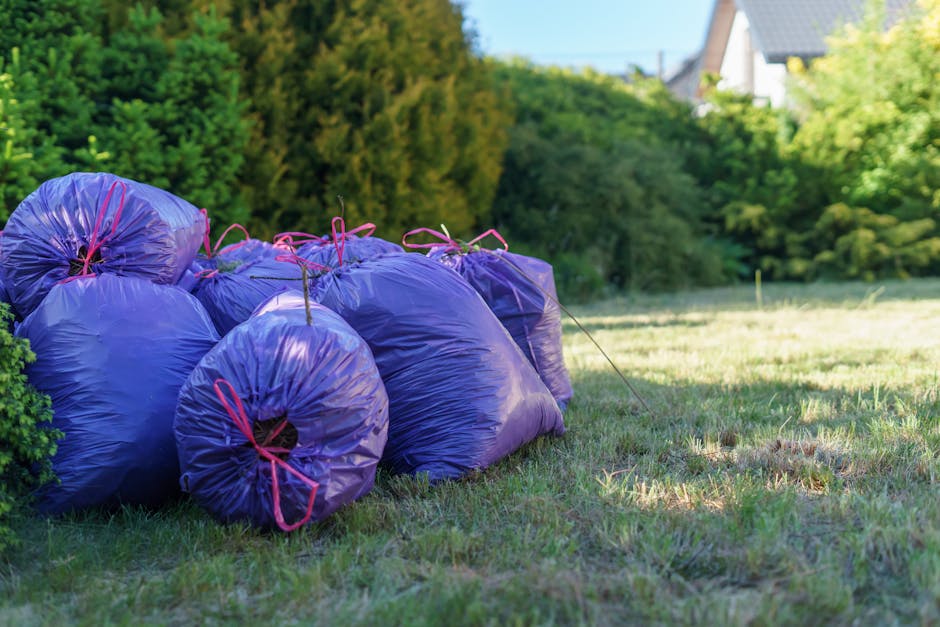
- Heavy-duty bags or garden sacks: Better for cuttings, leaves, and smaller offcuts.
- Tarpaulin or sheet: Handy for dragging piles together without scattering debris everywhere.
- Wheelbarrow or tub: Makes transport from the garden to the collection point much easier.
- Broom or leaf rake: For the final sweep once the main waste is gone.
As a recommendation, keep one area near the entrance or side return as a temporary staging point. That makes collection much smoother and avoids repeated carrying across the garden. It sounds minor, but it saves your back. And your patience.
If you want to understand how a local provider approaches responsible disposal, the page on recycling and sustainability is a helpful companion read. It gives you a better sense of how waste can be handled with less going to landfill where possible.
Law, Compliance, Standards, or Best Practice
When garden waste is collected, the important thing is not just removing it from sight. It should be handled in a way that follows accepted UK waste management practice. That usually means separating suitable green waste from general rubbish and making sure it is transported and processed by a responsible operator.
It is wise to be careful with who handles your waste. In plain English: if someone offers to take it away cheaply but cannot explain where it goes, that is not a great sign. Householders can still be left with issues if waste is fly-tipped or managed badly. Best practice is to use a provider that is clear about disposal, safety, and the handling of mixed materials.
Garden waste can also contain more than just organic matter. Soil, treated timber, broken pots, and old fixtures may fall under different handling requirements. That is why good sorting matters. Not because the process is being fussy, but because waste streams need to stay clean and manageable.
Where a job includes bulky items from outdoor repairs, the combined load may be better treated as general clearance rather than pure garden waste. In those cases, an approach like waste clearance is often more appropriate. Better to match the service to the job than force the job into the wrong box.
Options, Methods, or Comparison Table
There is more than one way to deal with garden waste in Castelnau Barnes. The right choice depends on volume, access, time, and what else is in the pile. Here is a simple comparison.
| Method | Best for | Pros | Trade-offs |
|---|---|---|---|
| Home composting | Small amounts of leaves, clippings, and soft trimmings | Low cost, useful for the garden, sustainable | Not suitable for large branches or mixed loads |
| Bag-and-collect approach | Moderate tidy-ups and regular maintenance | Simple, tidy, easy to stage for removal | Can become heavy and awkward if overfilled |
| Dedicated garden waste collection | Larger seasonal clear-outs | Convenient, faster, better for bulky loads | Requires proper separation and preparation |
| General waste clearance | Mixed garden and non-garden items | Useful when the job is broader than green waste alone | Less specialised than a pure green waste collection |
The main decision is usually this: are you dealing with a light tidy-up or a proper clearance? If it is just a few bags, you may not need much more than good preparation. If the garden has been left for months, or there are branches, roots, and old outdoor items piled together, a more complete service is usually the better fit.
Case Study or Real-World Example
Take a typical spring clean in a Barnes side garden. The job starts with a hedge that has grown wider than expected, a lawn edge full of clippings, and a corner where old cut branches have been sitting since the last windy spell. At first glance it looks manageable. Just a bit of pruning, a few bags, done by tea time.
Then the waste starts to build. The hedge produces more than expected. The branches do not fit neatly in the bags. Some of the leaves are wet, so they clump together. By the time everything is gathered, the pile is larger and heavier than it looked on the ground. The homeowner now has a choice: make multiple trips themselves, or arrange a collection that can take the lot in one go.
In this kind of scenario, the sensible move is not heroics. It is planning. Separate the waste, reduce the size of branches, stage everything near access, and arrange a collection that suits the volume. The garden ends up clean, the path is clear again, and the whole space feels usable. That's the win.
This kind of approach is also helpful around busy local routines, especially where people are balancing work, school runs, or a weekend that has already vanished before lunch. A proper collection saves the most valuable thing of all: time.
Practical Checklist
Use this checklist before collection day. It keeps the process calm and avoids that last-minute scramble with a bag that suddenly rips open.
- Separate green waste from general rubbish
- Trim long branches into manageable pieces
- Use strong bags or bundles
- Remove stones, plastic, and non-organic items where possible
- Keep the pile accessible for loading
- Avoid overfilling bags
- Make sure pathways are clear and safe
- Check whether any material needs special handling
- Stage the waste somewhere dry if possible
- Confirm the collection time and any preparation instructions
Expert summary: The best garden waste collection is rarely the one that starts with the biggest pile. It is the one that starts with separation, sensible sizing, and a clear idea of what should be removed. Get those three things right and everything else gets easier, almost boringly so.
Get a free quote today and see how much you can save.
Conclusion
A well-managed garden waste collection is one of those jobs that quietly improves everything around it. The garden looks better, the space feels easier to use, and the work stops hanging over you. In Castelnau Barnes, where outdoor spaces often matter just as much as the rooms inside, that makes a real difference.
Whether you are clearing a few bags after weekend pruning or tackling a bigger seasonal tidy-up, the formula is the same: sort carefully, prepare sensibly, and choose the right collection method for the load. Keep it practical, keep it safe, and do not let the pile grow any bigger than it needs to. Small wins count here.
And when the last branch is gone and the path is finally clear, the garden tends to breathe again. So do you.


 Tipper Van - Waste Collection and Rubbish Removal Prices in Barnes, SW13